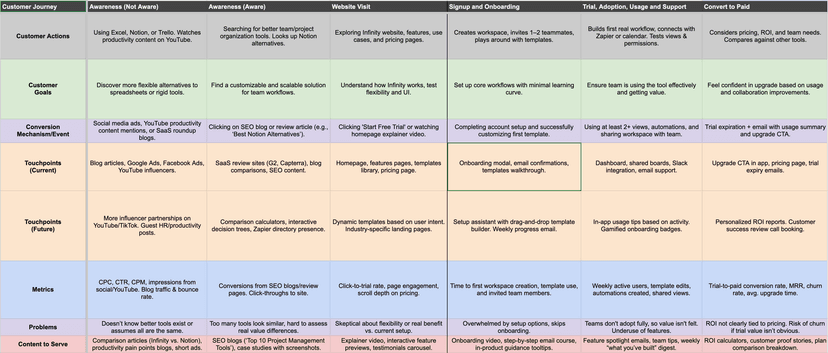
Each template helps you assess channels based on customer fit, buying intent, potential impact, execution requirements, cost, speed, and scalability. Choose the framework that matches your go-to-market model, or use both if your company combines self-service acquisition with sales-assisted growth.
About the Customer Acquisition Channels Templates
Want a quick answer first? The free Acquisition Channel Finder ranks all 150 channels for your stage, budget and goals, no spreadsheet needed.
If you are unsure which marketing channels your SaaS company should prioritize, our Customer Acquisition Channels Templates provide a structured way to compare and prioritize your options.
The resource includes two separate spreadsheets:
- Product-Led SaaS Customer Acquisition Channels
- Sales-Led B2B Customer Acquisition Channels
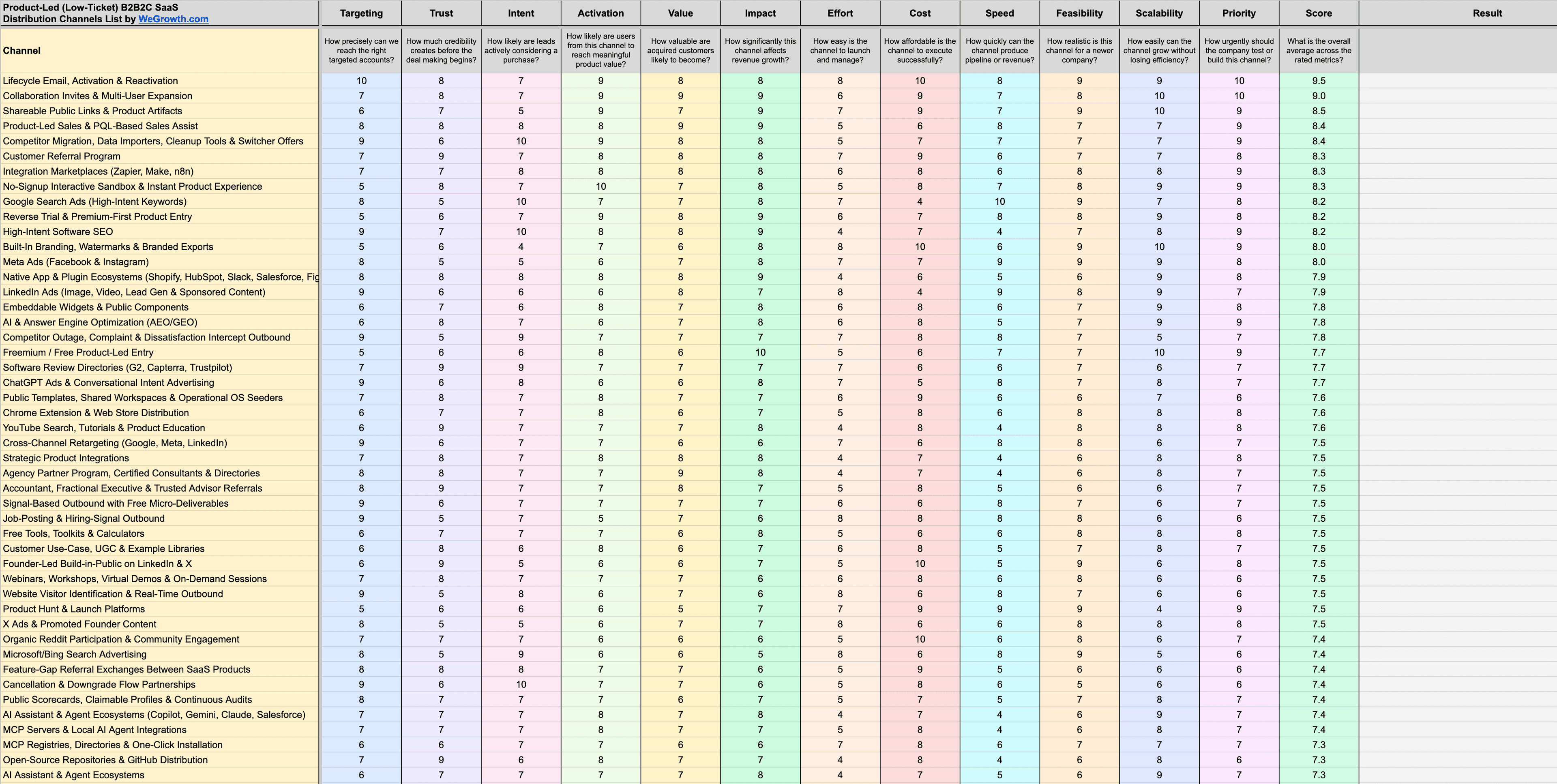
Each spreadsheet contains a dedicated channel list tailored to its go-to-market model. Channels are scored based on factors such as targeting, trust, buying intent, customer value, cost, speed, feasibility, scalability and potential business impact.
What Is Included in the Templates?
Product-Led SaaS Customer Acquisition Channels
The product-led spreadsheet is designed for low- and mid-ticket SaaS products where users can discover, experience, adopt, or purchase the product with limited sales involvement.
It includes channels and growth plays such as:
- Lifecycle email
- Collaboration invites
- Referral programs
- Product-led sales
- Shareable outputs
- Integration marketplaces
- High-intent SEO and paid search
- Freemium and reverse trials
- Interactive product experiences
- Developer and AI ecosystems
Product-led channels are assessed across:
- Targeting
- Trust
- Intent
- Activation
- Customer value
- Business impact
- Effort
- Cost
- Speed
- Feasibility
- Scalability
- Priority
The additional Activation criterion helps you evaluate whether users acquired through each channel are likely to reach meaningful product value, not simply create an account.
Sales-Led B2B Customer Acquisition Channels
The sales-led spreadsheet is designed for high-ticket B2B and enterprise SaaS products with longer buying cycles, larger contracts, and sales-assisted purchasing journeys.
It includes channels and growth plays such as:
- Customer referrals
- Warm investor and advisor introductions
- Signal-based outbound
- Account-based marketing
- LinkedIn distribution
- Review platforms
- Strategic partnerships
- Cloud marketplaces
- Analyst relations
- Executive events
Sales-led channels are assessed across:
- Targeting
- Trust
- Intent
- Customer value
- Business impact
- Effort
- Cost
- Speed
- Feasibility
- Scalability
- Priority
These criteria help you compare each channel’s potential to reach relevant accounts, create qualified opportunities, influence pipeline, and generate revenue.
What the Templates Help You Do
Use the templates to:
- Compare 150 scored channel entries across product-led and sales-led acquisition
- Identify channels that match your pricing, customer value, and buying process
- Separate fast experiments from long-term, compounding opportunities
- Compare growth potential with cost and execution difficulty
- Avoid investing in channels that do not fit your economics
- Align marketing, product, sales, and leadership around shared priorities
- Turn a long list of possible tactics into a focused testing roadmap
- Record actual results and update your priorities over time
The templates are intended to support decisions – not prescribe one universal channel strategy.
How to Use the Templates
- Download the Product-Led or Sales-Led spreadsheet or both for a hybrid model.
- Make an editable copy.
- Remove channels that are not relevant.
- Adjust the scores using your audience, budget, resources, and past results.
- Select three to five priority channels to test.
- Define the owner, budget, timeline, KPI, and success threshold.
- Update the scores with real performance data.
The ratings are a starting point. Final priorities should reflect your customer data, funnel performance, capabilities, and business goals.
Need help choosing the right channels? Read our blog for more details, explore our SaaS growth marketing services or request a free personalized growth plan.


![150 Customer Acquisition Channels for B2B & SaaS Startups, Ranked [+ Free Template]](/_next/image?url=%2Fimages%2Fblogs%2Ftop-customer-acquisition-channels%2Ftop-customer-acquisition-channels-featured.png&w=828&q=75)