If you're evaluating a SaaS website design agency, you're not buying "design." You're buying a system that communicates your product with precision and moves visitors through a decision.
Most SaaS websites underperform for the same set of reasons: positioning is vague, the page hierarchy doesn't reflect how people actually evaluate software, proof is generic, and the conversion path is inconsistent (trial vs demo vs signup vs request access).
Teams often compensate by adding more content – more feature blocks, more integrations, more animations – when the real fix is simpler: tighten the narrative, make the page sequence intentional, and reduce friction at the exact moment someone is ready to act.
A strong SaaS marketing site is built around a few fundamentals:
- Clarity above polish: a visitor should understand who it's for, what it replaces, and why it's different within seconds.
- Structured page flows: home → use case/feature → pricing → proof/trust → CTA, with the right objections answered in the right order.
- Proof that matches risk: testimonials, case studies, security language, and implementation clarity that align with how buyers judge credibility.
- Scalability: modular sections, a maintainable CMS, and a page system your team can update without breaking the site.
In this guide, we've curated 11 agencies known for SaaS website design services, so you can compare options quickly and choose the right partner for your next build or redesign.
What a SaaS Website Design Agency Is (and Isn't)
A SaaS web design agency builds and improves the marketing website for a SaaS product – the pages people see before they sign up or request a demo. That includes the structure, messaging hierarchy, and conversion paths across the core pages that drive evaluation.
What It Is
A good SaaS website partner is responsible for outcomes like clarity, trust, and action, not just aesthetics. In practice, that means:
- Positioning translated into page structure Clear "who it's for / what it does / why it's different" messaging, placed where visitors expect it, with supporting proof in the right order.
- Conversion-first page flows A deliberate sequence that answers evaluation questions: homepage → use cases/features → pricing → proof → trust/security → CTA (demo/trial/signup), without forcing visitors to hunt.
- SaaS-specific pages (not just a homepage redesign) Strong agencies know the site is a system of pages: pricing, feature/use-case, integrations, comparison pages, security/compliance, demo/trial pages, and campaign landing pages.
- Maintainable builds Modular sections, a sensible CMS structure, and component-based layouts so your team can ship updates without the site becoming fragile.
What It Isn't
A lot of teams hire the wrong type of partner because "SaaS design" gets blurred. Here's the clean line:
- Not product UI/UX design Product UX is post-login: navigation, workflows, dashboards, onboarding inside the app. A SaaS marketing site is pre-login: explanation, persuasion, and conversion.
- Not "branding-only" work Brand identity helps, but if the agency can't explain how the site will convert visitors (and which pages handle which objections), you'll end up with a polished site that still underperforms.
- Not a one-page cosmetic refresh If the agency only talks about visuals and animations, but not information architecture, proof, CTAs, and maintainability, you're likely buying design – not performance.
Once you separate SaaS marketing websites from product UI or branding work, shortlisting gets much easier. Let's now dive into our list of SaaS website design companies for 2026.
The 11 Best SaaS Website Design Agencies (2026)
1. WeGrowth
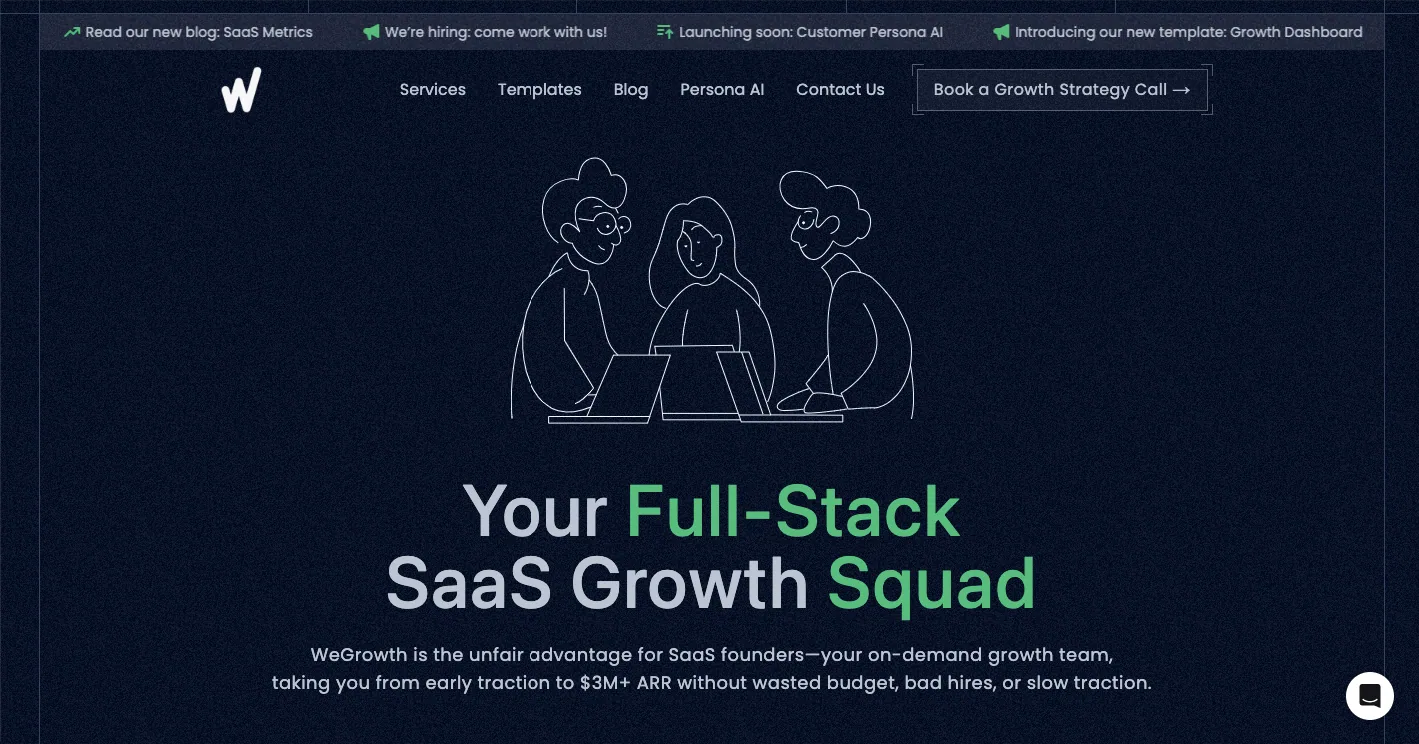
Most agencies will redesign your website. WeGrowth builds a performance system: positioning, messaging hierarchy, page architecture, and landing page templates designed to convert and designed to be iterated, not "finalized."
WeGrowth is not a "design-only" studio. As a SaaS website design agency, their website work sits inside a broader growth capability (strategy, analytics, messaging, CRO, SEO), but the advantage for SaaS growth marketing teams is practical: your site gets built the way SaaS websites actually win – clear offers, clean page flows, proof where it matters, and conversion paths aligned to intent. That applies across your homepage, use-case pages, pricing, comparison pages, and campaign landing pages, especially when the site needs to support ongoing acquisition and content.
On execution, WeGrowth covers both design and build. Their SaaS website design services includes website and landing page design, comparison and review pages, CRO-focused web design sprints, interactive tools/widgets, custom builds (Next.js/Laravel), and CMS setups for easy updates – which is exactly what SaaS teams need if they're shipping new pages regularly.
What to expect
- SaaS website page system (not just a homepage): homepage + core supporting pages (use cases/features, pricing, comparison/review pages, and campaign landing pages).
- Conversion-first structure and messaging: the offer and narrative translated into a section hierarchy that matches how people evaluate SaaS.
- Landing page templates for scale: reusable layouts for SaaS landing page design so campaigns don't require reinventing pages.
- CRO-focused design sprints: targeted improvements on key pages and CTAs, built to be iterated.
- Build options that fit your stack: CMS for easy updates, plus custom website builds when needed.
Best fit for
- SaaS teams that want the website treated as a growth asset (clarity + conversion + iteration), not a one-off redesign.
- Teams running acquisition + content who need a repeatable landing page system and new pages shipped reliably.
- Companies that need both design + development (including CMS and comparison/review pages), not just Figma concepts.
- Teams that want web decisions connected to real constraints: messaging, measurement, and what actually drives signups or demos.
Pricing
Pricing depends on scope of work. For more information, get in touch with the team.
2. Amply
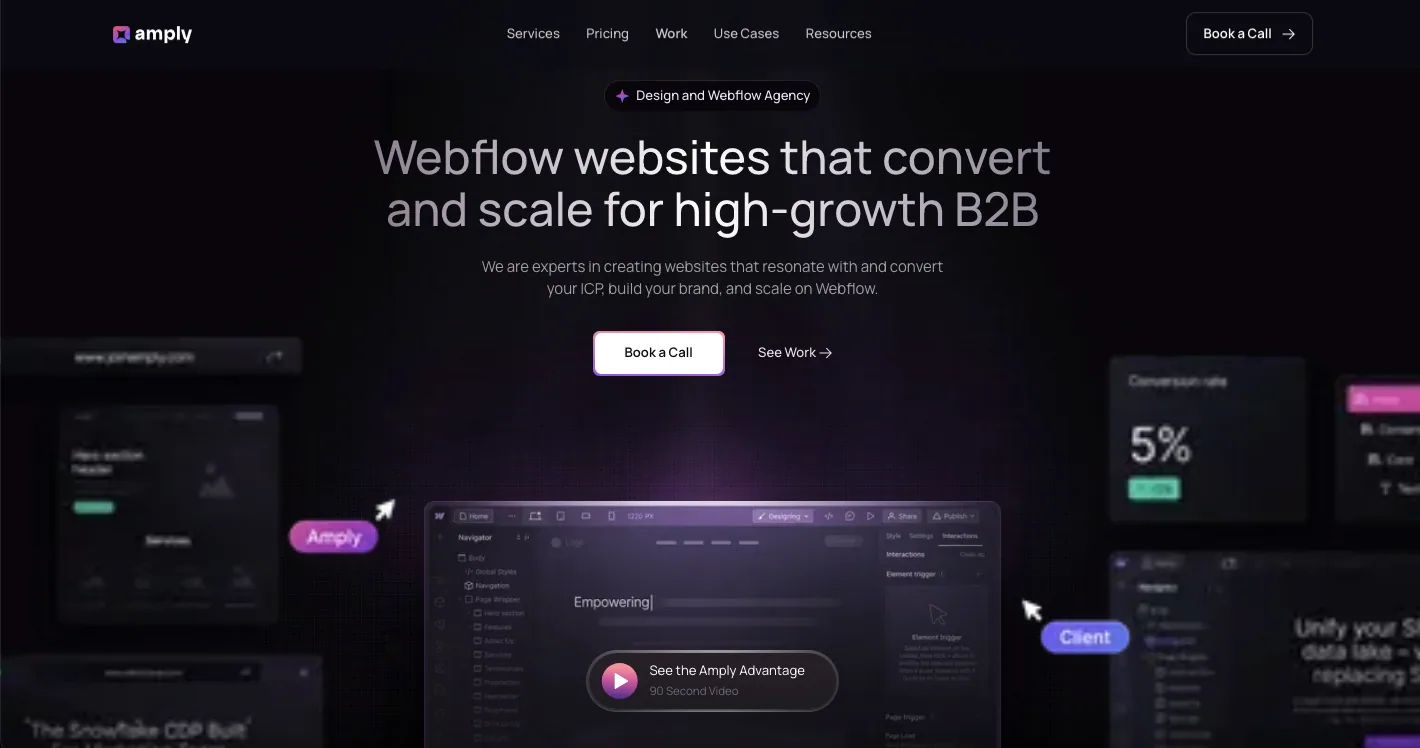
Amply is a Webflow-first SaaS website design agency focused on building SaaS marketing websites that are clear, conversion-oriented, and easy for internal teams to maintain. Their positioning centers on SaaS website design (not product UI) and Webflow execution.
What to expect
- Webflow design + build (not just Figma).
- Conversion-first page structure and messaging hierarchy.
- A scalable, CMS-friendly setup for ongoing updates.
- A process that typically runs discovery → IA/wireframes → design → build → launch.
Best fit for
- SaaS teams that want a Webflow-native partner for a maintainable marketing site.
- Teams optimizing for clarity and conversion, not just visuals.
3. Huemor
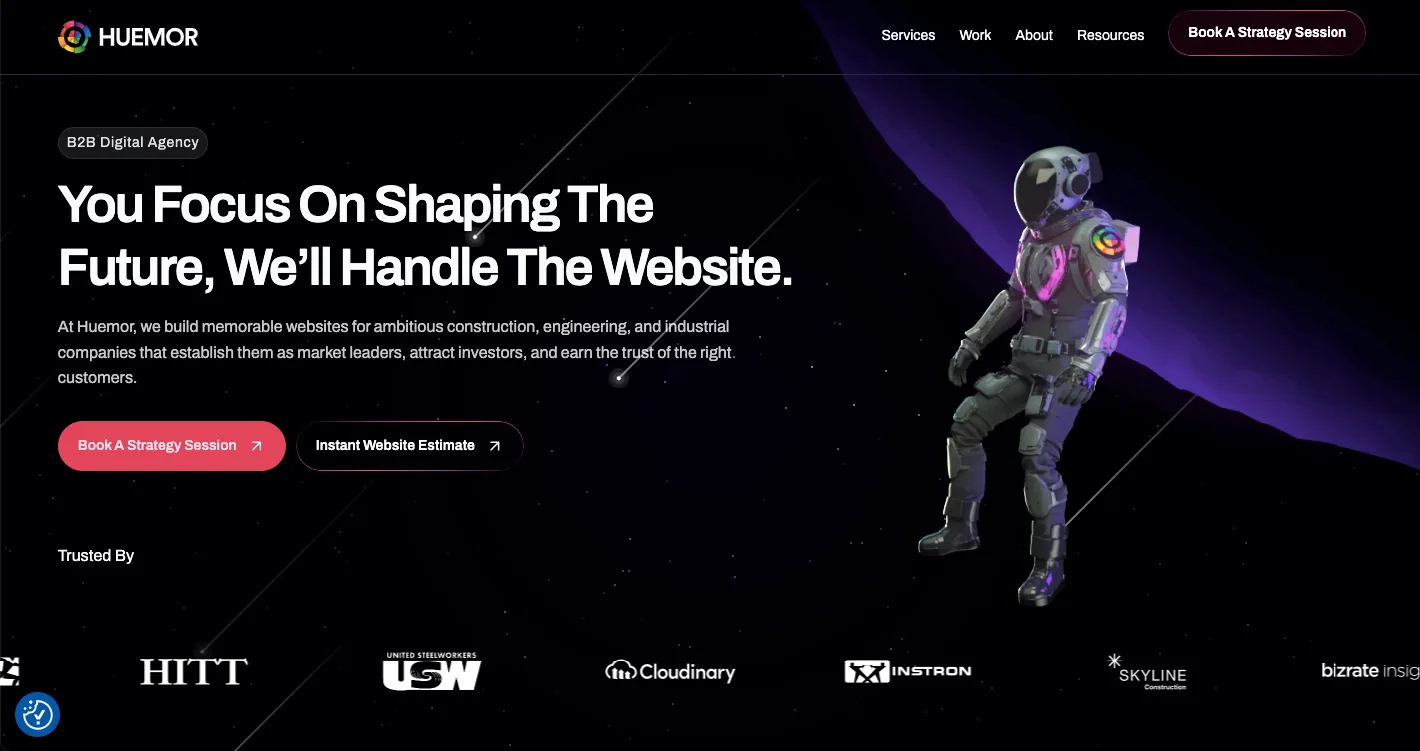
Huemor is a US-based company with a dedicated SaaS website design agency offering. Their positioning is direct: they redesign SaaS marketing websites to streamline messaging, clarify value, and improve how sites support trials, demos, and buyer evaluation, especially when a company has outgrown an "MVP-era" website.
What to expect
- SaaS website strategy that prioritizes messaging clarity and buyer flow.
- Design systems and page structures built for trials, demos, and self-service paths.
- Collaborative sprints that align marketing, product, and sales around a single site narrative.
- A conversion-oriented redesign approach (not just visual polish).
Best fit for
- SaaS teams whose website has strong product depth but weak clarity, structure, or conversion paths.
- Companies that want a partner who can translate complex SaaS value into a simpler, more persuasive marketing site.
4. Halo Lab
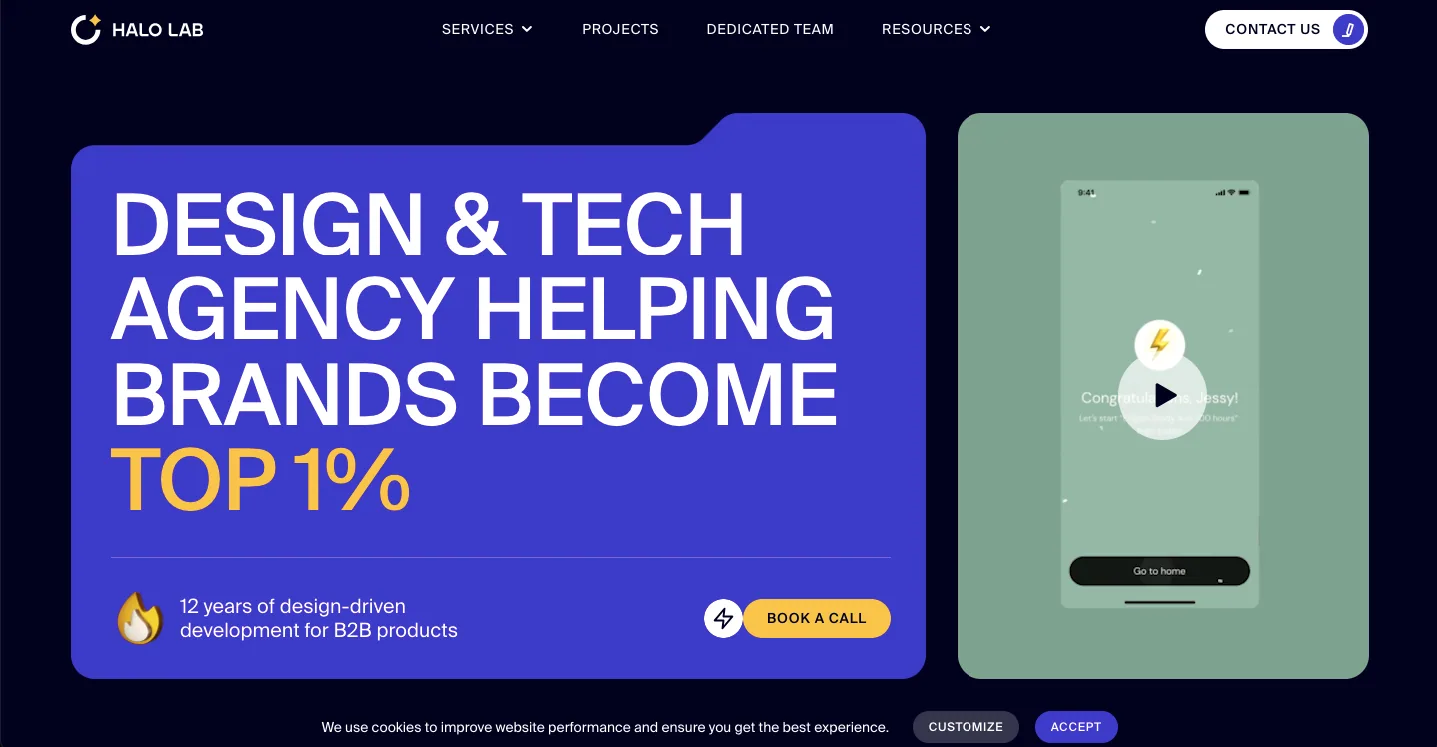
Halo Lab is a design and development agency with dedicated SaaS website design services, focused on building SaaS marketing websites that communicate value clearly and present the product in a polished, user-centered way. They position this specifically around SaaS and tech brands, with end-to-end capability from design through development.
What to expect
- SaaS website design focused on clarity and user-centric structure.
- End-to-end execution: strategy/design plus development capability.
- Webflow builds and custom development options.
- A defined process with milestones from discovery to launch.
Best fit for
- SaaS teams that want a high-polish marketing site without sacrificing usability fundamentals.
- Teams that want one partner for both design + build (Webflow or custom dev).
5. Refokus
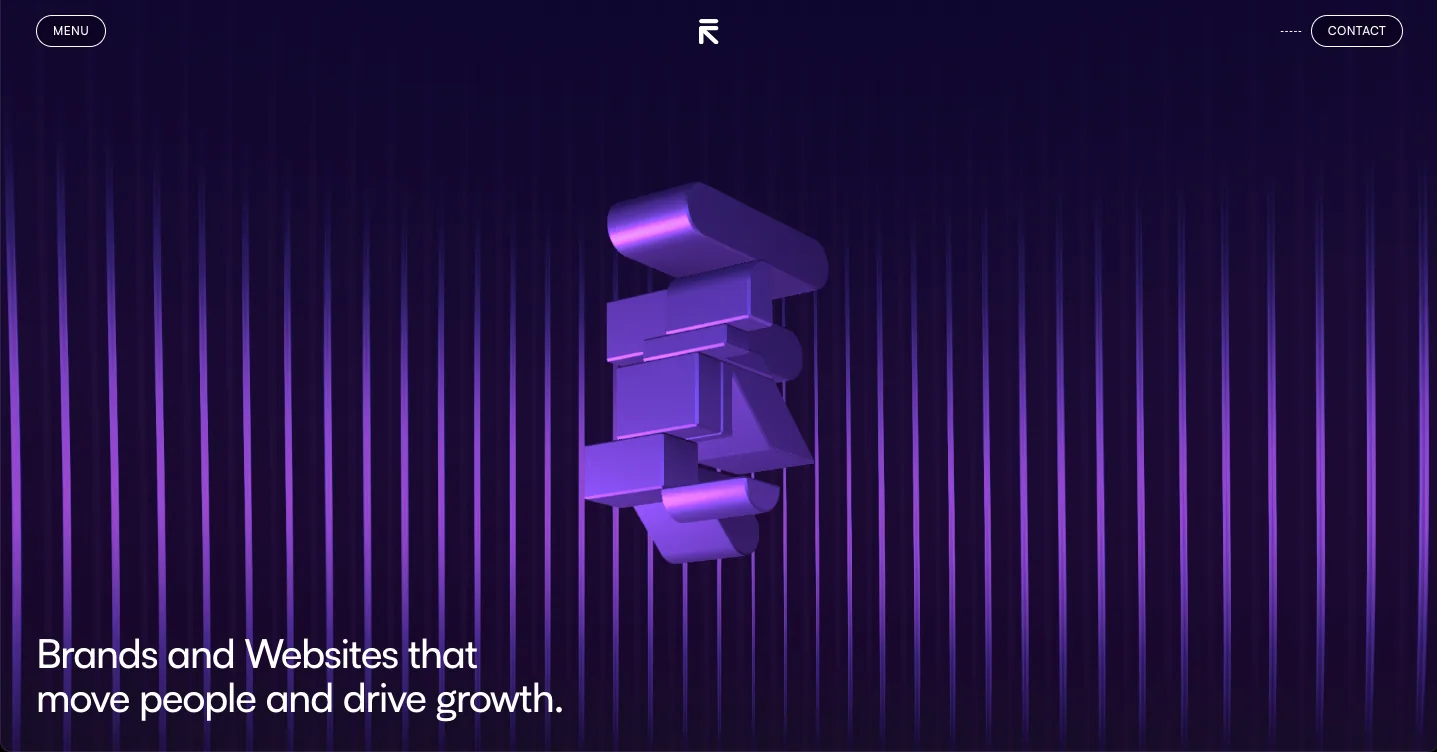
Refokus is a Webflow agency that positions itself at the intersection of high-end design and conversion-focused strategy. They're known for websites that feel modern and premium, often with strong interaction/motion, while still framing the work around engagement and conversion outcomes rather than aesthetics alone.
What to expect
- Webflow design + development (execution, not just concepts).
- High-end visual craft, often with interaction/motion.
- A scalable, responsive build designed to be functional and maintainable.
- Strong emphasis on conversion and engagement in how they frame their work.
Best fit for
- SaaS teams that want a premium, modern site in Webflow without losing conversion discipline.
- Teams that care about craft (brand feel, interactions) but still want the site to support clear actions.
6. Flow Ninja
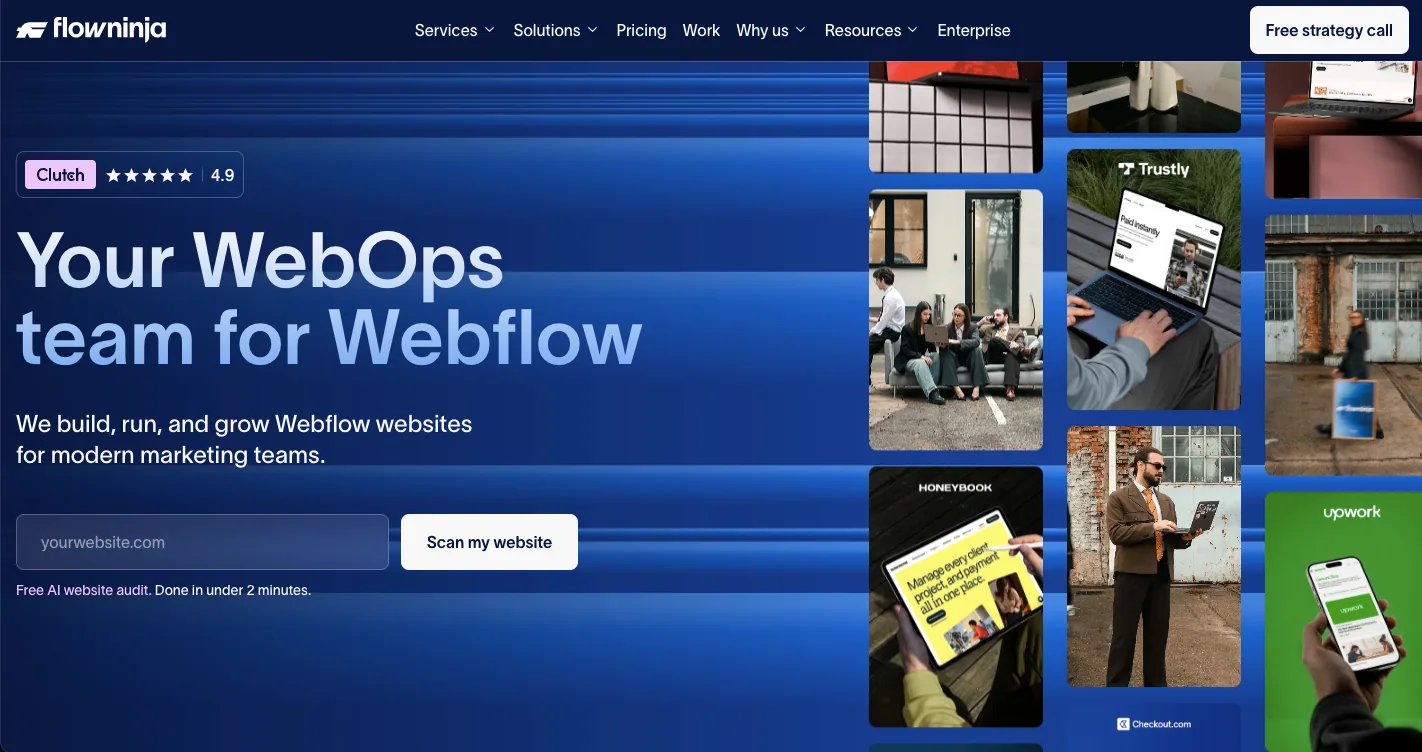
Flow Ninja is a Webflow-first agency built around a "WebOps" model, meaning they position themselves as an embedded team that designs, builds, and continuously operates Webflow marketing websites (not just one-off launches).
What to expect
- Webflow design + development delivered as an ongoing operating model (WebOps).
- Structured execution to keep sites scalable, maintainable, and fast to update.
- Support across launch + ongoing iteration (not just a handoff).
- Optional add-ons like migrations, SEO support, and related web operations services.
Best fit for
- SaaS teams on Webflow that need a long-term partner to ship updates and improvements continuously.
- Marketing teams with constant website backlog who want an embedded "web team" approach.
7. Finsweet
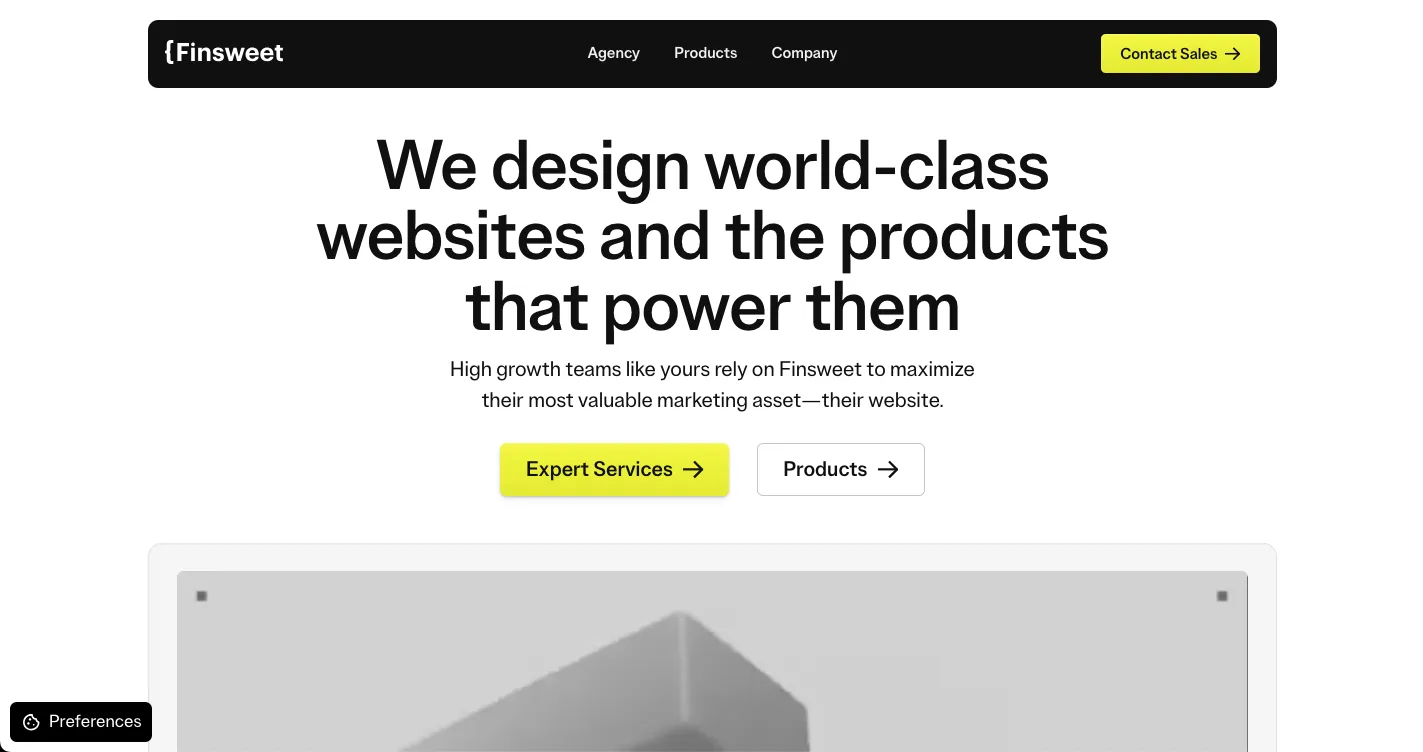
Finsweet designs and builds scalable, maintainable marketing websites, especially for teams that care about clean systems, performance, and complex CMS structures. They're also known for the tooling and frameworks they've created for the Webflow ecosystem (e.g., Client-First), which shows up in how structured their builds tend to be.
What to expect
- Webflow design + dev from a SaaS web design agency.
- Structured, scalable builds (strong CMS/component systems).
- Support for migrations, integrations, and "recovery"/complex Webflow work.
- A process geared toward maintainability and long-term iteration.
Best fit for
- SaaS teams already on (or moving to) Webflow that want a systems-first web design company.
- Marketing teams with complex CMS needs (content scale, multi-page systems, governance).
8. BX Studio
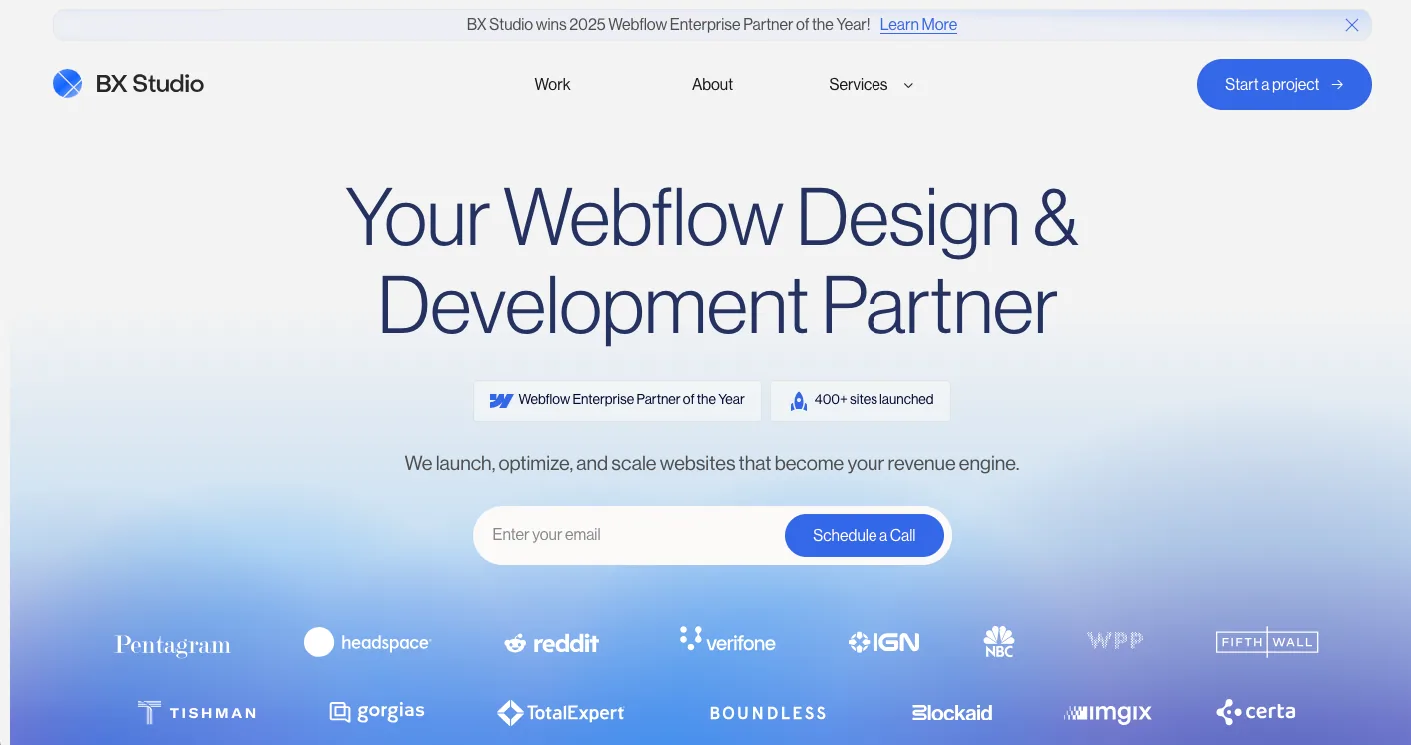
BX Studio is a Webflow agency focused on building and maintaining high-performing marketing websites, with an emphasis on scalability, technical quality, and search fundamentals. For SaaS teams, they're typically a fit when you want a Webflow partner that can deliver both design and engineering-grade execution – not just a visual layer.
What to expect
- Webflow design + build from a specialist SaaS web design agency.
- Scalable CMS structure and modular components for long-term iteration.
- Launches, migrations, and ongoing support/maintenance workflows.
- Search-focused foundations aligned with their SEO/AEO positioning.
Best fit for
- SaaS teams that want a systems-first agency for Webflow (build quality + maintainability).
- Content-led teams that need clean CMS architecture and strong technical execution.
9. Veza Digital
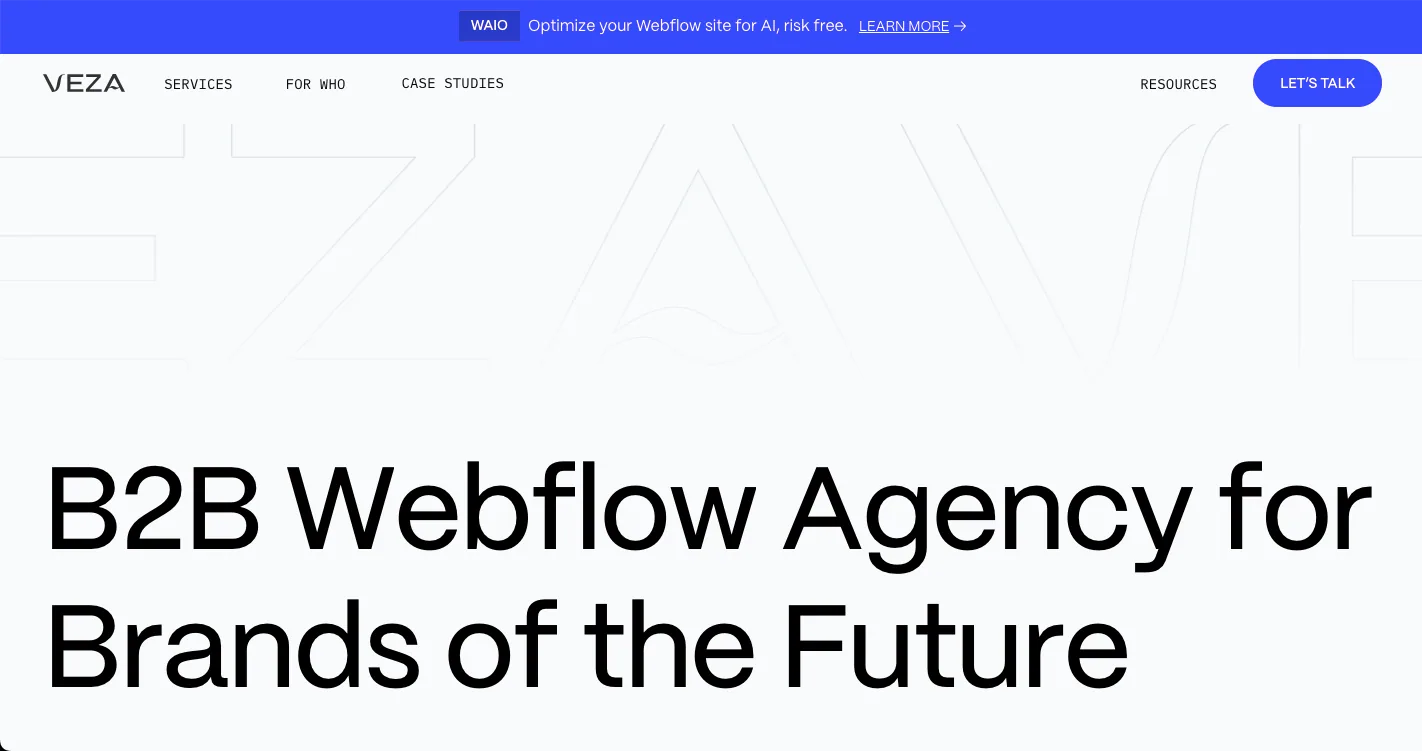
Veza Digital is a growth-focused agency that builds and optimizes marketing websites for SaaS and B2B brands. Their positioning blends web execution with CRO/SEO thinking, which makes them a fit when you want the site built to support measurable conversion outcomes, not just look polished.
What to expect
- Strategy-led website design and build.
- Conversion-focused page structure and landing pages.
- SEO-aligned site foundations as part of their approach.
- Ongoing optimization support (CRO-led).
Best fit for
- SaaS teams that want a site partner blending design/build with CRO + SEO.
- Teams who don't want a one-off redesign – they want continuous improvement.
10. Bop Design
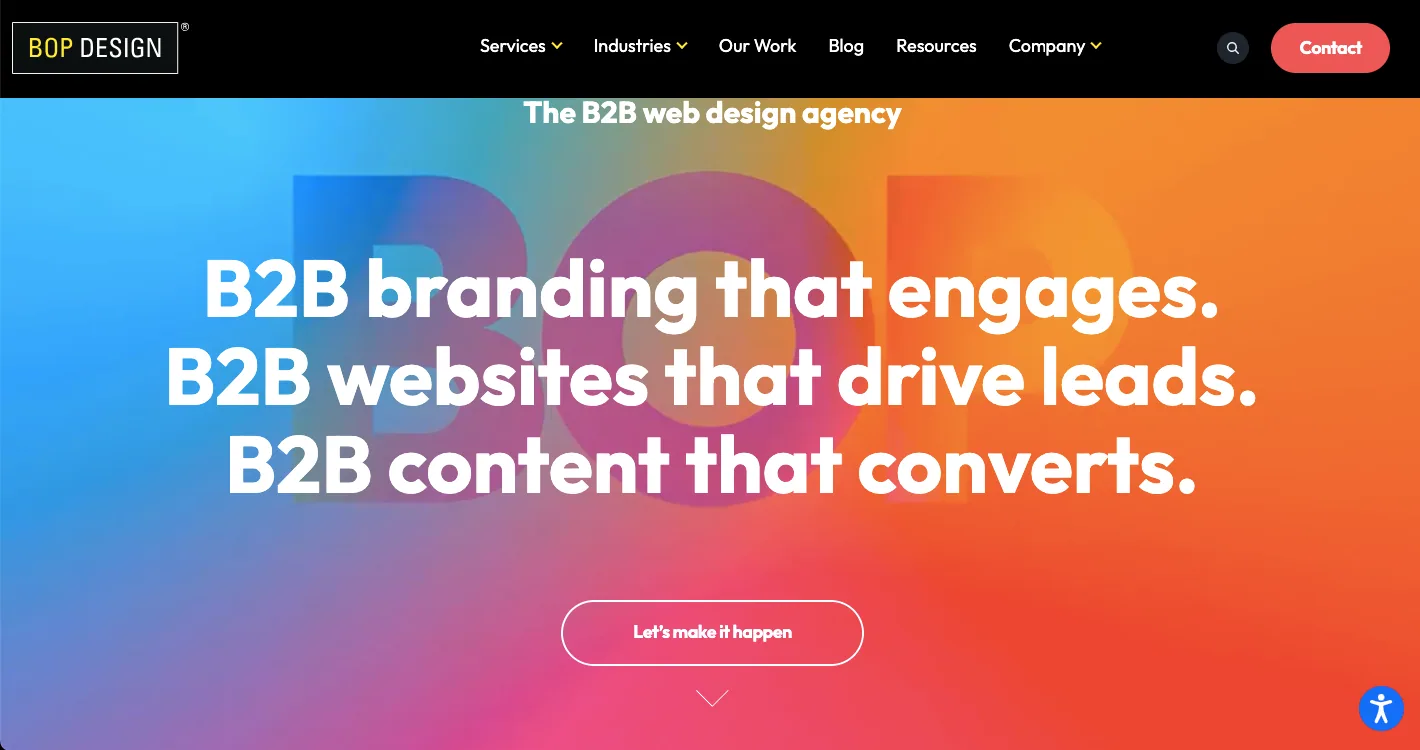
Bop Design is a B2B web design agency with a dedicated B2B SaaS web design offering. They focus on building marketing websites designed to attract and convert leads, with an emphasis on clear positioning, credibility, and decision-oriented page flows.
What to expect
- Full website design and development for B2B SaaS.
- Lead-generation focused website structure and CTAs.
- Content/copy support as part of the engagement.
- A complete marketing website build (not just one-off pages).
Best fit for
- B2B SaaS teams that want a lead-gen focused SaaS website design company.
- Teams that want one partner for site build + messaging/copy, not just visuals.
11. Ramotion
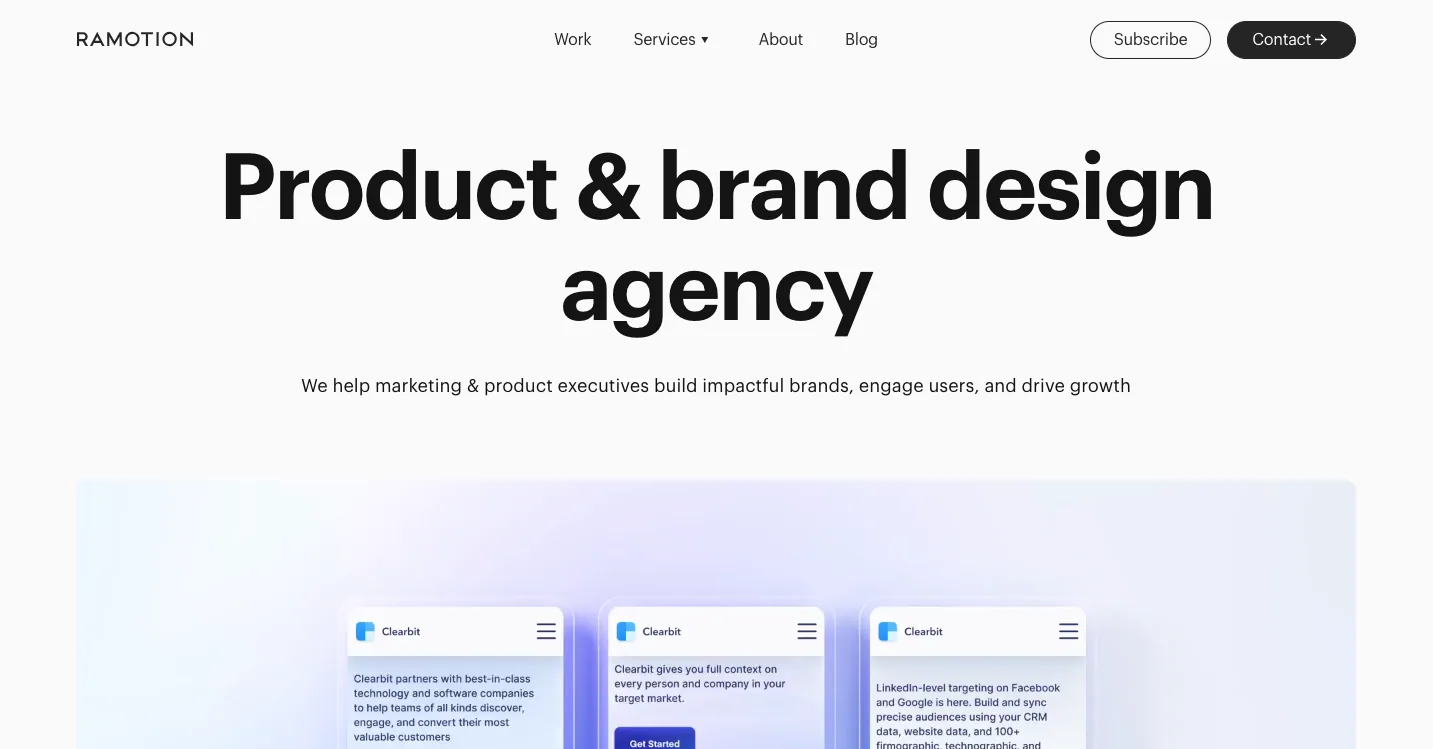
Ramotion is a global SaaS web design agency that combines marketing website design with UX/UI expertise and a strong emphasis on translating complex products into clear, modern web experiences. Their SaaS web design offering is positioned around building conversion-focused websites that support core SaaS pages.
What to expect
- End-to-end web design for SaaS marketing websites.
- UX/UI execution paired with SEO/performance considerations.
- Support for broader brand + product design needs if required.
- A structured process from discovery to launch.
Best fit for
- SaaS teams that want a polished site with strong UX foundations and brand consistency.
- Teams that prefer a partner that can also cover adjacent design needs.
Common Mistakes SaaS Web Design Companies Make
Most SaaS website projects don't fail because the agency can't design. They fail because the site isn't built around evaluation: what the visitor needs to understand, believe, and do – step by step. These are the most common mistakes we see, and the fixes that prevent wasted redesign cycles.
1. Hiring Product UI Designers for a Marketing Website
Why it happens: "SaaS design" gets treated as one bucket.
Fix: hire for pre-login conversion + messaging structure, not post-login workflows.
2. Prioritizing Visuals Over Clarity
Why it happens: teams judge portfolios, not outcomes.
Fix: lock the narrative and hierarchy first; polish second.
3. Shipping a Homepage Without a Real Proof System
Why it happens: feature lists substitute for credibility.
Fix: build proof into the page flow (logos, quotes, case studies, security signals).
4. Unclear Conversion Paths
Why it happens: too many CTAs or mixed intent on the same page.
Fix: choose a primary path and make every core page support it.
5. Treating Launch as "Done"
Why it happens: redesigns are scoped as one-time deliverables.
Fix: ship with a measurement plan and a prioritized optimization backlog.
6. Building a Site Marketing Can't Update
Why it happens: pages are hard-coded or non-modular.
Fix: modular components + CMS structure that supports fast iteration.
If you avoid these six traps, you don't just get a "better-looking" site – you get a site that's easier to maintain, easier to iterate, and far more likely to improve conversion once real traffic hits it. To help you lock the right inputs, outputs, and build requirements, we've prepared a deliverables checklist you can go through before hiring an agency.
SaaS Website Deliverables Checklist
Strategy
- Page map + primary conversion path (demo vs trial vs signup)
- ICP + messaging inputs (or a short messaging workshop)
- Information architecture + page hierarchy for core pages
Copy + UX
- Hero system (promise + proof + CTA)
- Objection handling blocks (security, ROI, implementation, integrations)
- Proof system (logos, testimonials, mini case studies)
Design System
- Modular components (feature blocks, proof blocks, CTA blocks)
- Mobile-first layouts + accessibility basics
Build + Launch
- CMS structure (blog/resources/case studies)
- Core SEO hygiene (titles, H1 structure, internal links)
- Analytics readiness (key events tracked)
Post-Launch
- CRO backlog: top 5 tests to run first (hero, CTA, proof order, pricing layout, forms)
Conclusion
Choosing a SaaS website design agency comes down to one thing: can they turn your product into a clear, credible decision path and ship a site your team can operate, update, and improve over time.
If the agency can't explain why the homepage is structured a certain way, where proof should live, and how the conversion path works across pricing, use cases, and landing pages, you're likely paying for aesthetics, not performance.
If you want WeGrowth to review your current website, our team can run a focused teardown and map the highest-impact changes: messaging hierarchy, page structure, CTAs, and SaaS landing page design improvements. Book a strategy call and let's see how we can work together.